Seismic guide · SBC 2209 and 1705.13.7
Rack-Supported Decks in Seattle's Seismic Categories D to F: Inspections, Certificates and Shop Drawings
When a deck rides on steel storage racks in Seattle, the racks carry the deck and its earthquake design. Seattle adds three steps for taller racks, most of them tied to the higher seismic categories: shop drawings, periodic special inspection and a certificate to the owner. Here is when each one applies.
Which Seattle Rules Cover a Rack-Supported Mezzanine?
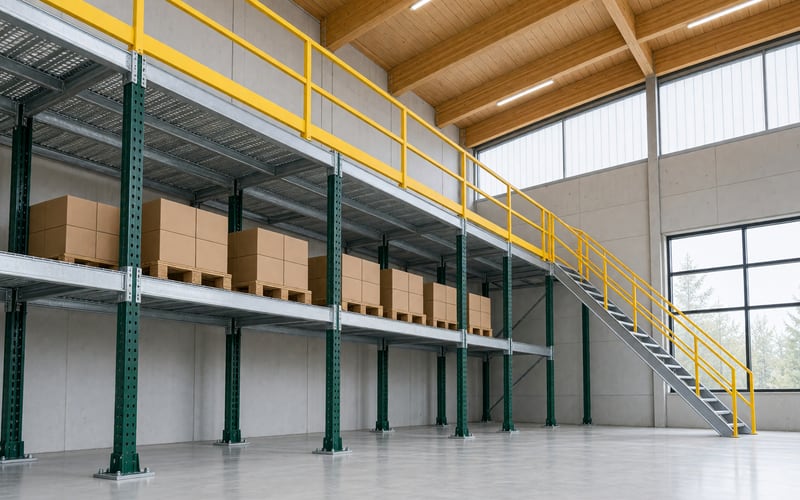
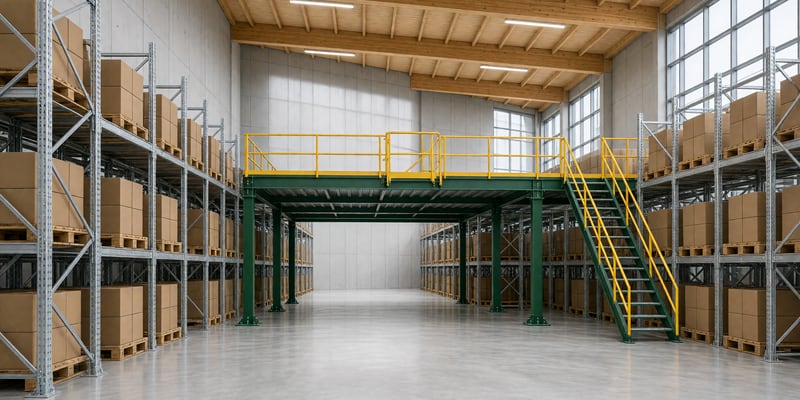
Chapter 22 of the Seattle Building Code covers the racks, and Chapter 17 covers their inspection. SBC 2209.1 says steel storage racks are designed, tested and used under RMI ANSI/MH 16.1. "Where required by ASCE 7, the seismic design of steel storage racks shall be in accordance with Section 15.5.3 of ASCE 7." Cantilevered racks follow RMI ANSI/MH 16.3 under Section 2209.2. A walk deck that sits on the racks inherits that design, so the racks come first. Our rack-supported mezzanines in Seattle page covers layouts, and warehouse pick modules covers multi-level systems.
When Does a Rack Need Periodic Special Inspection in Seattle?
When it stands 8 feet or taller and the building falls in Seismic Design Category D, E or F. SBC 1705.13.7 says steel storage racks and cantilevered racks of that height and category "shall be provided with periodic special inspection as required by Table 1705.13.7." Periodic means the inspector visits at stages, not for the whole install. The table names four things to check:
- Materials, against the approved construction documents.
- "Fabricated storage rack elements".
- "Storage rack anchorage installation", tied to ANSI/MH16.1 Section 7.3.2.
- The "Completed storage rack system, to indicate compliance with the approved construction documents."
Section 108.1 has these checks done by registered special inspectors, apart from SDCI's own building inspections. Your engineer confirms the category for your building. We plan the install so the inspector can see the anchors before the bottom beams hide them. File the inspection reports with your permit records. They show what was checked, and when, against the approved plans.
What Is the Rack Certificate of Compliance in Seattle?
It is a written statement, handed to the owner, that the racks match the approved plans. SBC 2209.3 applies it to rack storage structures 8 feet or taller to the top load level that are in Category D, E or F "at completion of the storage rack installation." The certificate states "that the work was performed in accordance with approved construction documents." The height is measured to the top load level, not to the top of the uprights. Keep the certificate with your permit set and the sealed drawings. A future buyer, tenant or engineer will ask for it.
When Does SDCI Want Rack Shop Drawings?
Once racks reach 6 feet in height. SDCI's post-permit shop drawing standard lists "Storage Racks (greater than or equal to 6 feet in height)" among the drawings it needs after the permit. They show the "Size and configuration of storage racks, design loads, and anchorage details." The seal depends on height. SDCI wants a civil engineer's seal and signature for racks up to 8 feet, citing SBC 106.5.2.2. For racks over 8 feet, it wants a structural engineer's.
| Rule | Height trigger | Also needs | Source |
|---|---|---|---|
| Rack shop drawings to SDCI | 6 feet or taller | Size, layout, design loads and anchorage details | SDCI shop drawing standard |
| Civil engineer's seal on shop drawings | Racks up to 8 feet | Seal and signature | SDCI, citing SBC 106.5.2.2 |
| Structural engineer's seal on shop drawings | Racks over 8 feet | Seal and signature | SDCI, citing SBC 106.5.2.2 |
| Periodic special inspection | 8 feet or taller | Seismic Design Category D, E or F | SBC 1705.13.7 |
| Certificate of compliance to the owner | 8 feet or taller to the top load level | Category D, E or F at completion | SBC 2209.3 |
How Is Rack Height Measured for These Seattle Rules?
It depends on the rule, so read each one's own words. The certificate rule in SBC 2209.3 counts racks "8 feet (2438 mm) in height or greater to the top load level." The special inspection rule in Section 1705.13.7 says racks "8 feet (2438 mm) in height or greater." SDCI's shop drawing list speaks of storage racks "greater than or equal to 6 feet in height." A rack with uprights just over 8 feet but a lower top shelf can land on different sides of these lines. Your engineer states the heights on the drawings, and plan review applies them. We measure both the uprights and the planned top load level at the first visit.
What If the Building Is Not in Category D, E or F?
Then the inspection and certificate rules in this guide do not reach the racks, but the rack standard still does. Both SBC 1705.13.7 and 2209.3 name Seismic Design Category D, E or F. Section 2209.1, by contrast, applies RMI ANSI/MH 16.1 to steel storage racks in general. SDCI's 6-foot shop drawing list does not name a category either. So a building outside those categories still needs a rack design and, from 6 feet, shop drawings. Your engineer assigns the category from the code tables for your site. We never assume one for a Seattle address.
Do These Rules Reach Pick Modules and Two-Tier Racks?
They follow the racks wherever steel storage racks carry a level. A pick module or a two-tier rack with a walkway often uses rack frames as its columns. Where it does, Chapter 22 sets the rack design and Chapter 17 sets the inspection. Plan review decides how each part of the system is classified. Storage height can also bring in the Seattle Fire Department. Its memo says a permit is needed for a high-piled storage area over 500 square feet. Ask us early if the racks will hold tall loads of stock.
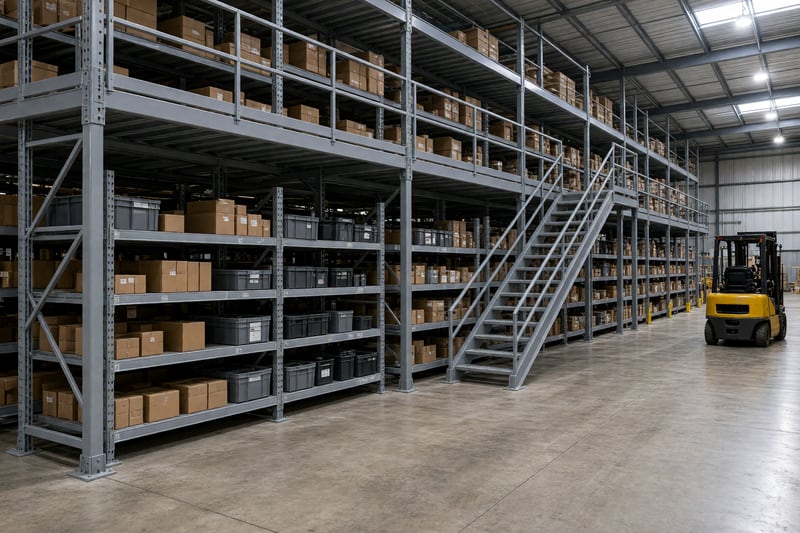
Why Does the Deck Design Start From the Rack in Seattle?
Because the racks are the columns, so the deck's earthquake loads run through them. SBC 1613.1 requires each structure and its attached parts to resist earthquake motions. On a rack-supported deck, the walkway, its guardrail and the stock all sit on the rack frames. The rack design therefore has to account for the deck above it. A free-standing steel mezzanine works the other way, with its own columns and bracing. Our guide to mezzanine seismic design in Seattle covers that case.
A storage deck on racks also needs a posted load sign inside Seattle. SBC 107.1 reaches every warehouse and storage area, whatever the rating. Read Seattle's load-posting rule for what the sign shows.
Where Do Rack Shop Drawings Fit in the Seattle Permit Process?
They come after the main permit, as a post-permit submittal. SDCI's standard is titled "Post-Permit Submittals: Shop Drawing Requirements," and racks of 6 feet and up are on its list. The deck and its frame are structural work, so the main permit goes through SDCI plan review first. The rack shop drawings then follow with the seal SDCI asks for. Build the gap between permit issue and rack delivery into your schedule. Our guide to the SDCI permit for a mezzanine covers the main filing step by step.
What Do We Line Up Before Racks Go In?
The heights, the engineer, the shop drawings and the inspection dates. We confirm the top load level and the deck height with you first. Those two numbers decide which rules in this guide apply. A Washington-licensed engineer sets the seismic design and seals the drawings; we do not seal them. You buy the racks and deck through us, and our installers erect and anchor them.
- Measure: deck height, top load level and the slab at each upright.
- Engineer: category, rack design and anchorage, sealed to SDCI's rules.
- Submit: rack shop drawings at 6 feet and up, with the right seal.
- Install: frames, anchors and deck, with inspection visits booked at each stage.
- Close out: the certificate of compliance to the owner where it applies.
If the layout shifts during the job, the engineer revises the drawings first. We build the change only after the revised sheets are approved.
Seattle Rack Seismic Questions, Answered
Do pallet racks need special inspection in Seattle?
Racks 8 feet or taller do when the building is in Seismic Design Category D, E or F. SBC 1705.13.7 calls for periodic special inspection of materials, rack parts, anchorage and the finished system.
Source: 2021 Seattle Building Code, Section 1705.13.7
Who seals rack shop drawings for SDCI in Seattle?
It depends on height. SDCI wants a civil engineer's seal and signature for racks up to 8 feet and a structural engineer's for racks over 8 feet. Its shop drawing list starts at racks 6 feet tall.
Source: SDCI, Post-Permit Submittals: Shop Drawing Requirements
Who receives the rack certificate of compliance in Seattle?
The owner does. Under SBC 2209.3, racks 8 feet or taller to the top load level in Category D, E or F get a certificate stating the work followed the approved construction documents.
Source: 2021 Seattle Building Code, Section 2209.3
Sources, read November 2026: Seattle Building Code 2021, Chapter 22 (steel and storage racks) · Seattle Building Code 2021, Chapter 17 (special inspections) · SDCI, Post-Permit Submittals: Shop Drawing Requirements · Seattle Building Code 2021, Chapter 16 (loads and Section 1613 earthquake design) · Seattle Fire Department, Client Assistance Memo 5983, High-Piled Storage