Code guide · SBC 107.1
Seattle's Warehouse Load-Posting Rule: A Sign on Every Storage Level
Inside Seattle, a storage mezzanine gets a posted load sign whatever its rating. The City's own Chapter 1 adds every warehouse and storage area to the posting rule, on top of floors designed above 125 psf. Here is what the rule says, which decks it reaches, and how the sign ties to occupancy.
What Does Seattle's Load-Posting Rule Require?
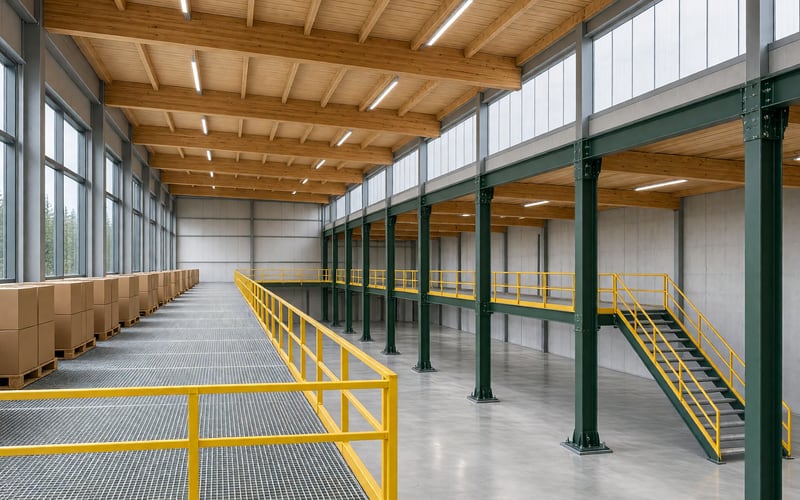
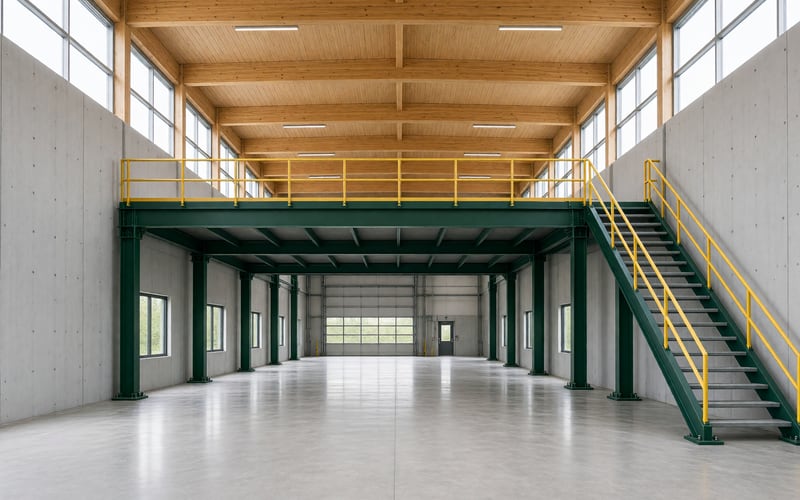
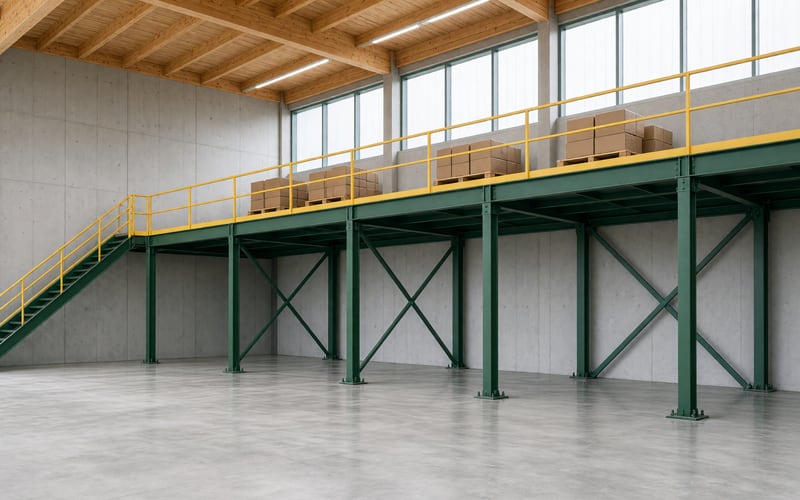
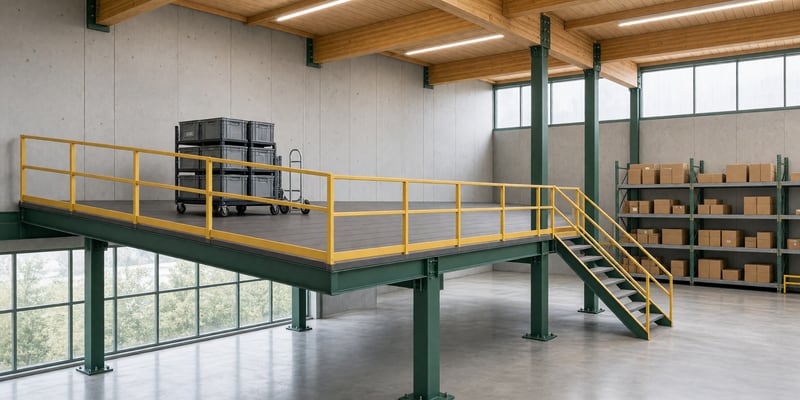
Durable load signs in every warehouse and storage area, and on other floors designed above 125 psf. Seattle Building Code Section 107.1 covers commercial and industrial buildings. It reaches floors designed for live loads that "exceed 125 pounds per square foot and for all warehouse and storage areas." Those design loads are then "conspicuously posted" in the part of each story where they apply, "using durable signs." The owner, or someone acting for the owner, does the posting. A storage mezzanine is a storage area, so the rule covers it. Our warehouse storage platforms in Seattle page covers the decks it reaches most often.
How Is Seattle's Load Sign Trigger Different From the Model Code?
Seattle adds a use trigger to the number trigger. The model International Building Code ties posting to floors designed above 50 psf. Seattle's Chapter 1 is entirely the City's own text, and its version has two parts. Any commercial or industrial floor designed above 125 psf gets a sign. So does every warehouse and storage area, at any rating. A light-storage deck designed at exactly 125 psf therefore still needs a sign in Seattle, because it is a storage area. Outside Seattle, posting follows the code that city has adopted. We check it for each address rather than assume the Seattle rule.
Which Seattle Mezzanines Need a Load Sign?
Every storage deck, plus any other deck designed above 125 psf. Each use has its own minimum live load in Seattle's Table 1607.1. The use also decides whether an area counts as storage. The table below reads the two rules together. Plan review settles how each area of your deck is classified, so treat the last column as a planning guide.
| Use on the deck | Minimum live load | Sign under SBC 107.1? |
|---|---|---|
| Storage warehouse, light | 125 psf | Yes: a storage area |
| Storage warehouse, heavy | 250 psf | Yes: a storage area, and above 125 psf |
| Wholesale store, all floors | 125 psf, 1,000 lb point load | Yes where used as storage; otherwise only if designed above 125 psf |
| Manufacturing, light | 125 psf, 2,000 lb point load | Only if designed above 125 psf or used as storage |
| Manufacturing, heavy | 250 psf, 3,000 lb point load | Yes: above 125 psf |
| Offices | 50 psf, 2,000 lb point load | Only if designed above 125 psf or used as storage |
| Walkways and elevated platforms (other than exitways) | 60 psf | Only if designed above 125 psf |
| Catwalks for maintenance and service access | 40 psf, 300 lb point load | Only if designed above 125 psf |
Do Rack-Supported and Shelving Decks Need Seattle Load Signs?
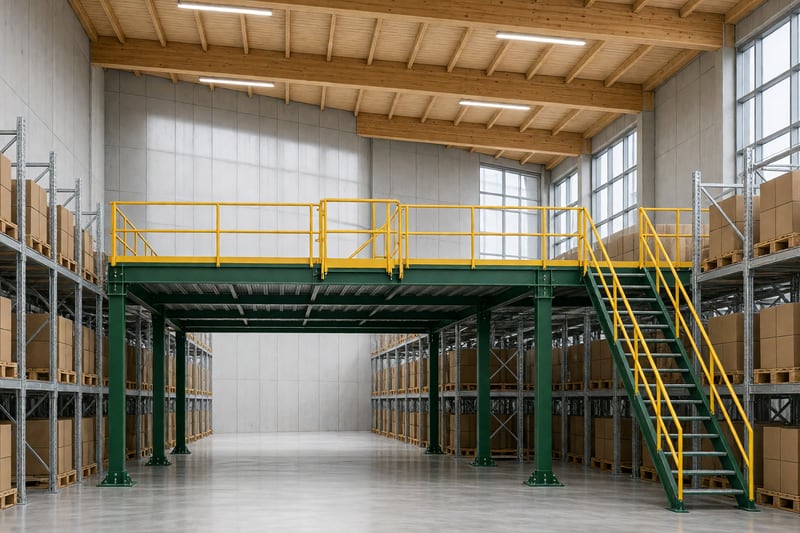
Yes, when they hold stock, because they are storage areas. A walkway on top of pallet racks or between shelving tiers stores goods, so SBC 107.1 reaches it at any rating. The racks under it bring their own rules as well. SBC 2209.1 sends steel storage racks to RMI ANSI/MH 16.1. Taller racks in the higher seismic categories also get special inspection and a certificate to the owner. Storage height can add a Seattle Fire Department permit for high-piled storage over 500 square feet. Our guide to pallet rack seismic requirements in Seattle covers the rack side.
Does Seattle's Rule Reach the Warehouse Floor Below the Deck?
The wording covers all warehouse and storage areas, not only raised decks. Section 107.1 asks for loads to be posted "in that part of each story in which they apply." Read plainly, the storage floor of a Seattle warehouse is a storage area too. The deck we add gets its own rating and its own signs. The rest of the building's postings stay the owner's to keep up. If the floor below has no sign today, ask your engineer what its design load is. Plan review decides which areas of your project need signs, so raise it before the drawings go in.
What Goes on a Seattle Load Sign, and Where Is It Posted?
The design live load for that area, posted where the people loading it will see it. SBC 107.1 has the design live loads posted "in that part of each story in which they apply." Section 1603.1.1 already puts those loads on the drawings: the "uniformly distributed, concentrated and impact floor live load used in the design shall be indicated for floor areas." So the sign repeats a number your engineer has already set. A deck with bays at different ratings gets a sign in each bay. Mount each one at the stair head or the pallet station, where loads arrive.
How Long Does a Seattle Load Sign Have to Last?
As long as the floor keeps that rating. The code asks for "durable signs" and adds: "It shall be unlawful to remove or deface such notices." So plan a plate fixed to the steel, not a paper label taped to a post. A metal plate fixed to a beam or column stays readable for years. If the rating ever changes, the sign changes with it, after an engineer's review. File the drawings that show each area's rating with your building records. A future tenant or buyer will want to match the sign to the design.
Can a Seattle Mezzanine Be Used Before the Load Signs Go Up?
Not where a certificate of occupancy is needed. SBC 107.2 says a certificate of occupancy "shall not be issued until the floor load signs, required by Section 107.1, have been installed." SDCI's permit steps list a certificate of occupancy where you have changed the use of your building. Either way, Section 107.1 makes posting the owner's duty on every storage deck. So put the signs on the install schedule with the rails and gates, ahead of the final inspection. Our guide to the SDCI permit for a mezzanine shows where that step falls.
What Load Rating Should a Seattle Storage Deck Carry?
The heaviest load you expect to store, and never less than the table minimum. SBC 1607.3 says design live loads "shall be the maximum loads expected by the intended use or occupancy but shall not be less than the minimum uniformly distributed live loads given in Table 1607.1." For storage warehouses, the table adds that they "shall be designed for heavier loads if required for anticipated storage." Washington's workplace rule asks the same of the surface. WAC 296-24-73505 requires that "each walking-working surface can support the maximum intended load for that surface." Point loads count as well, and Table 1607.1 lists them beside the uniform loads. Tell us pallet weights, cart wheels and rack legs up front.
What If the Deck's Use Changes Later in Seattle?
Have it re-rated before heavier stock goes up. SBC 107.3 makes it unlawful to place "a load greater than is permitted by this code" on any floor. The number on the sign is the limit your staff work to. If an office deck becomes storage space, it turns into a storage area under Section 107.1 and needs a sign. If a light-storage deck must take heavier pallets, an engineer checks the frame first. Then the sign is updated to match the new rating. Any added steel the engineer calls for can be supplied and fitted by our crew.
- Write down the new use and the heaviest load it brings.
- Have an engineer check the deck, beams, columns and anchors.
- Add any steel the check calls for, under a permit where one is needed.
- Replace the load sign with the new design rating.
Leave the old sign in place until the new rating is approved. That way the deck is never left without a posted limit.
Seattle Load Sign Questions, Answered
Does a light-storage mezzanine in Seattle need a load sign?
Yes. SBC 107.1 covers all warehouse and storage areas, not only floors designed above 125 psf. A storage deck designed at the 125 psf minimum still gets a durable sign.
Source: 2021 Seattle Building Code, Section 107.1
Does an office mezzanine in Seattle need a load sign?
Usually not, if it is designed at office loads and holds no storage. Table 1607.1 lists offices at 50 psf, below the 125 psf trigger. A storage area on the deck, or a design load above 125 psf, brings the sign back.
Source: 2021 Seattle Building Code, Section 107.1 and Table 1607.1
Who posts the load signs on a Seattle mezzanine?
The owner, or someone acting for the owner, under SBC 107.1. Each area's design rating comes off the sealed drawings, and we mark on the layout where its sign goes.
Source: 2021 Seattle Building Code, Section 107.1
Sources, read November 2026: Seattle Building Code 2021, Chapter 1 (permits, documents, load signs) · Seattle Building Code 2021, Chapter 16 (loads and Section 1613 earthquake design) · Seattle Building Code 2021, Chapter 22 (steel and storage racks) · Seattle Fire Department, Client Assistance Memo 5983, High-Piled Storage · WAC 296-24-73505 · SDCI, Construction Permit: Addition or Alteration