Platforms · Order picking
Warehouse Pick Modules in Seattle
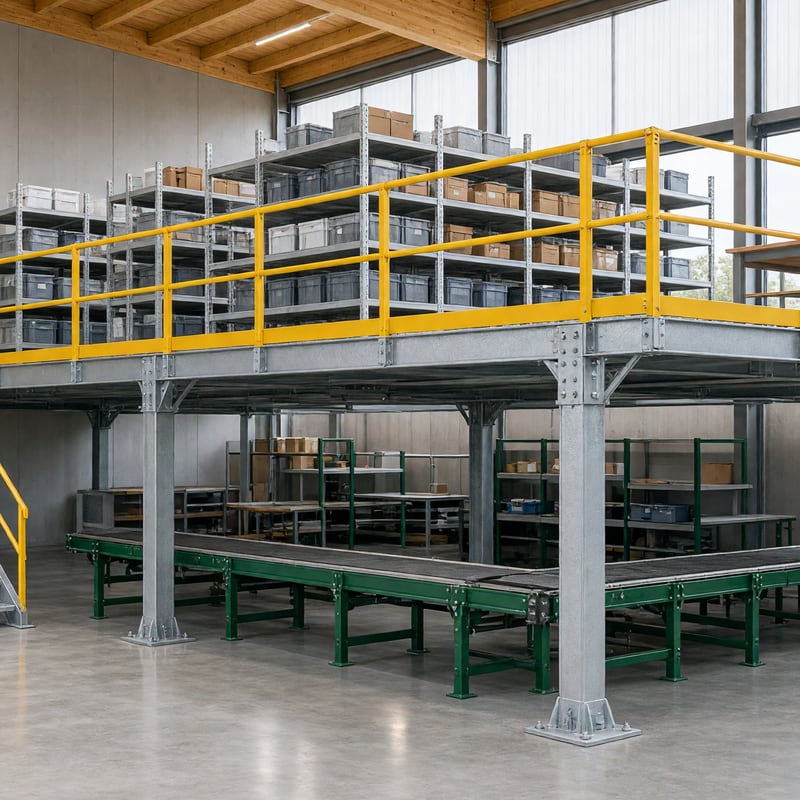
A warehouse pick module is pallet rack fitted with walk decks, stacked two or more high. Order pickers work every tier, and conveyor carries the orders away. We supply pick modules for Seattle and Puget Sound distribution buildings, and our crew installs them.
How Does a Warehouse Pick Module Work?
A warehouse pick module builds walk decks into pallet rack, so order pickers reach rack faces on several levels. Cases and totes load from the back, often in carton flow lanes, and roll forward to the pick face. Filled orders ride conveyor to packing or shipping. Because people work on each deck, the Seattle code treats each walk deck as a mezzanine level.
Layout and installation of pick modules are part of what our Seattle mezzanine installers do. Pick modules belong to the family of rack-supported mezzanines.
Why Do Puget Sound Distribution Buildings Use Pick Modules?
Because stacking pick faces in one footprint suits a region built around distribution. The Northwest Seaport Alliance, the cargo partnership of the Port of Seattle and Port of Tacoma, says it connects to "the second-largest concentration of distribution centers on the West Coast." Just south of Seattle, Tukwila's draft plan calls its industrial center "a major regional distribution hub, well served by auto, truck, air, rail, and water transportation."
More pick faces per square foot puts more SKUs within reach of each picker.
What Is a Multi-Level Pick Module, and How Is It Inspected in Seattle?
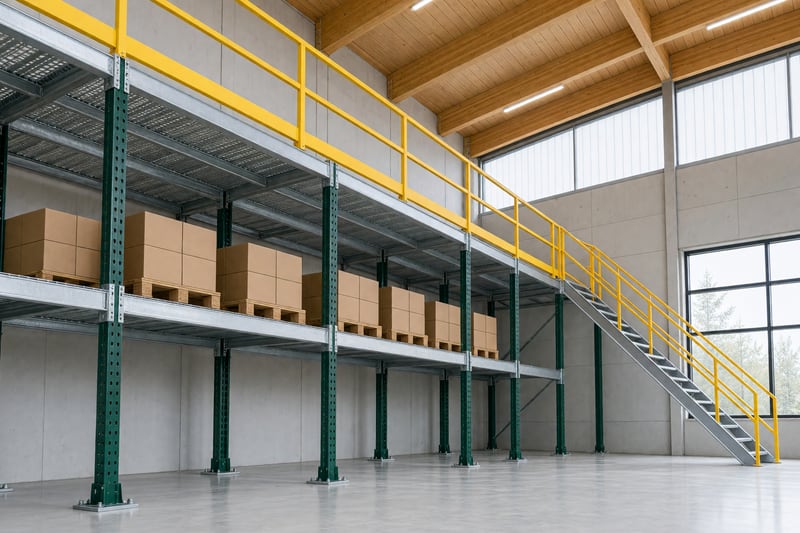
A multi-level pick module stacks two or more walk decks above the ground level. Each has its own pick faces and often its own conveyor. In Seattle, the rack under those decks carries its own inspection rules. Steel storage racks 8 feet or taller in Seismic Design Category D, E or F get periodic special inspection under SBC 1705.13.7. The inspector looks at four things:
- Materials, checked against the approved construction documents.
- The fabricated storage rack elements.
- The storage rack anchorage installation.
- The completed storage rack system.
When the install is done, SBC 2209.3 requires a certificate of compliance to the owner. It applies to racks 8 feet or taller to the top load level in those categories. Your engineer sets the seismic design for your site; see seismic mezzanine design.
Where Does Conveyor Run in a Seattle Pick Module?
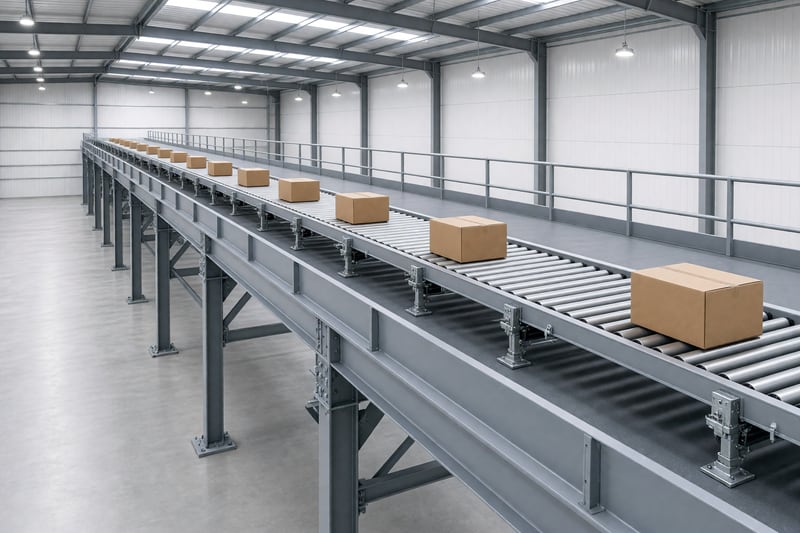
Most often it runs beside the pick face on every level and drops by spiral or incline to a floor-level takeaway line. Pickers set filled cartons on it and keep moving. Where a line blocks a walking route, a crossover bridge carries people over it. Conveyor legs and drives put point loads on the deck, so your engineer checks those spots apart from the general deck rating.
Which Gates Keep a Pick Module Edge Safe in Washington?
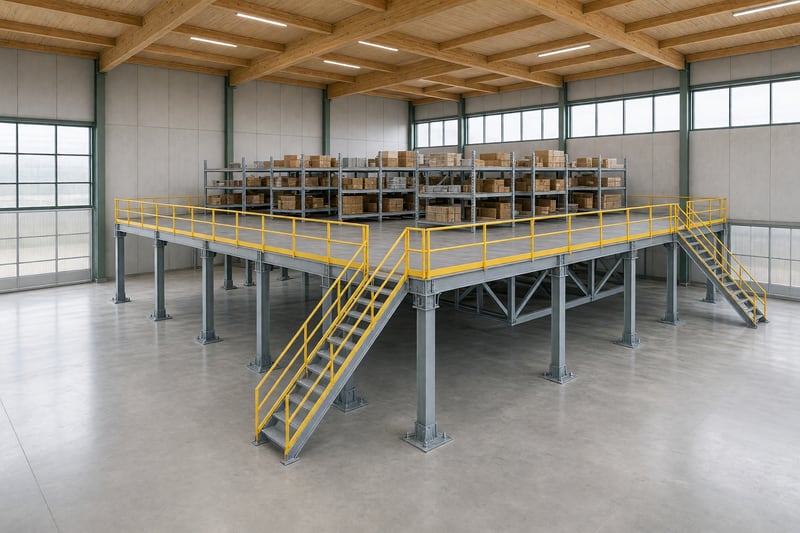
A pallet gate at every loading opening, and guardrail on every other open edge. Washington's fall protection chapter covers rails that come off. If a guardrail is removed for a task, the area "must be constantly attended by an employee until the guardrail is replaced" (WAC 296-880-20005). That person's only duty is to warn others, and they wear fall arrest or restraint. Gates that close one side while the other opens avoid pulling rail at all. That is our design choice, not a code rule.
Compare gate styles on stairs, railings and gates.
Pick Module or Free-Standing Mezzanine for a Seattle Building?
It depends on the work. High-volume picking from rack faces suits a pick module. Packing, storage or offices above suit a free-standing deck, because its open floor can change later. Tying decks into rack saves columns, yet the layout is then set by the rack bays. A structural steel mezzanine keeps both levels free to rearrange.
Weigh both on mezzanine options and plan the budget with the cost guide. SDCI's permit path is on Seattle permits and code.
What Does a Pick Module Project Include?
A pick module job covers the rack bays, the walk decks on each level and supports for the conveyor. It also covers stairs from level to level, guardrail along open edges, and a gate at each loading opening. The order is placed with us, and our own installers put the structure up. We measure the room, settle the layout and loads with you, and coordinate the sealed drawings and the permit with the Seattle Department of Construction and Inspections. The same team takes it from the first site visit to the final inspection.
- Site visit: clear height, column lines, slab, doors and forklift routes.
- Layout and loads: deck size, stair and gate positions, and the design load for the use.
- Drawings and permit: plans sealed by a Washington-licensed engineer, filed with the building department.
- Supply: the columns, beams, decking, stairs, rails and gates, plus a lift when the plan calls for one, delivered to your dock.
- Install and sign-off: our crew erects it, anchors it and walks the inspector through it.
Sources, read November 2026: Seattle Building Code 2021, Chapter 2 (definitions) · Seattle Building Code 2021, Section 505 · Seattle Building Code 2021, Chapter 17 (special inspections) · Seattle Building Code 2021, Chapter 22 (steel and storage racks) · Seattle Building Code 2021, Chapter 1 (permits, documents, load signs) · SDCI, Multifamily and Commercial STFI Checklist · Chapter 296-880 WAC, Unified safety standards for fall protection · Northwest Seaport Alliance, Who We Are · City of Tukwila, Comprehensive Plan, Regional Centers element (draft)
01Questions
Pick Module Questions, Answered
Does a pick module in Seattle need a building permit?
Yes. SBC 106.1 requires a building permit before a structure is built, enlarged or altered. New mezzanine framing is structural work, and SDCI's checklist sends structural work to plan review, not to the quicker subject-to-field-inspection permit.
Source: SBC 106.1; SDCI STFI checklist
Is each pick module deck a mezzanine under Seattle's code?
Yes. Each deck people work on is a level between the floor and ceiling of the story, which brings Section 505 into play. Inside city limits, all the decks in one room share the one-half area limit. Each one needs 7 feet clear above and below.
Source: SBC Chapter 2; SBC 505.2, 505.2.1
Who receives the rack certificate of compliance in Seattle?
The owner, or the owner's agent. SBC 2209.3 requires the certificate for rack storage 8 feet or taller to the top load level. The rule applies where the building is in Seismic Design Category D, E or F. The certificate states that the work followed the approved construction documents.
Source: SBC 2209.3
02Request for quote
Ask for a Written Quote
Tell us where the building is, how much clear height you have and what the deck has to carry. A local installer reviews it, asks what is missing and sends a written quote for the Seattle-area job.
- 1You describe the room, the load and the timing.
- 2We check the size against the code that applies at your address.
- 3You get a written scope and quote for supply and installation.
Prefer to talk? (425) 790-3315
Add Usable Floor in Your Seattle Building
- Sized to the load you will put on the deck.
- Planned for the code that applies at your address.
- Designed with the engineer for earthquake forces.