Safety guide · WAC 296-880-10020
Fall Protection Work Plans at Ten Feet: When Guardrails Make One Unnecessary in Seattle
Washington asks employers for a written fall protection work plan wherever a fall would be 10 feet or more. The same rule drops that duty where a guardrail system removes the fall hazard. For catwalks, crossovers and work platforms in Seattle buildings, that one note shapes the whole design.
When Does Washington Require a Written Fall Protection Work Plan?
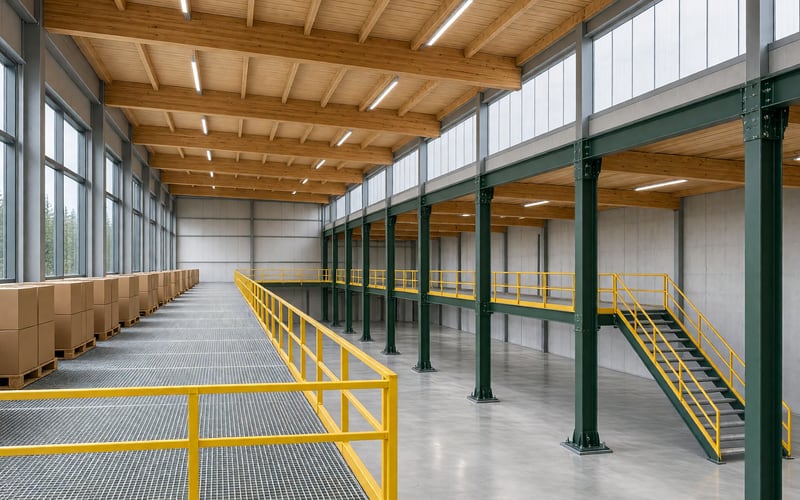
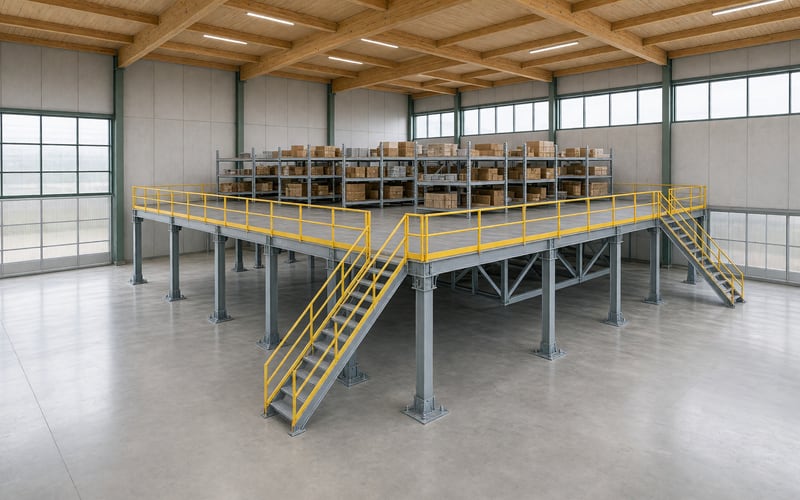
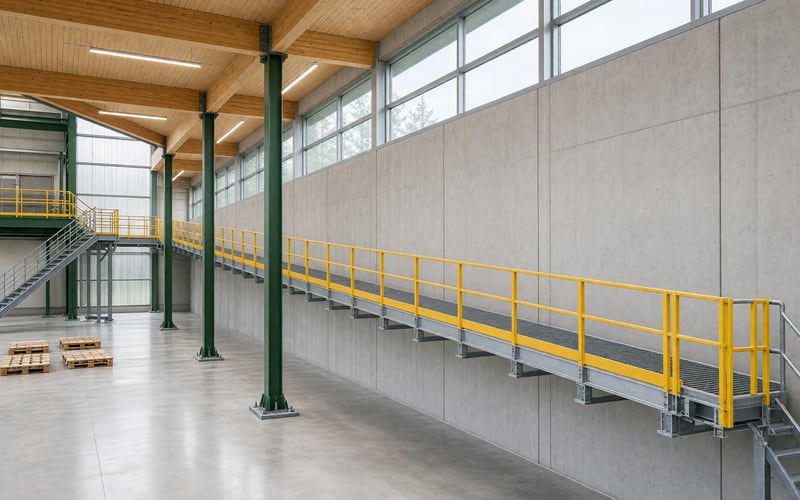
Wherever employees work and a fall would be 10 feet or more. WAC 296-880-10020(1) says: "The employer must develop and implement a written fall protection work plan including each area of the work place where the employees are assigned and where fall hazards of ten feet or more exist." The plan names the hazards and the methods used against them. It also covers how systems are put up and inspected, how tools are handled, overhead protection and rescue. It must be kept on site. See our Seattle catwalks and crossover bridges and industrial work platforms for the structures it most often touches.
When Do Guardrails Make the Work Plan Unnecessary in Washington?
When the guardrail system eliminates the fall hazard. The rule's own note reads: "A fall protection work plan is not required where the use of a guardrail system eliminates the fall hazard." So the deciding question is whether a standard guardrail closes every open side. A catwalk railed on both sides, end to end, removes the hazard along its run. A platform with one side left open for equipment access does not, at that side. Design the edges first. The written plan then often shrinks to the few spots that stay open, or disappears.
What Counts as a Guardrail That Removes the Hazard in Washington?
One that meets WAC 296-880-40005 on every open side. The top rail is set between 39 and 45 inches. "The intermediate rail must be halfway between the top rail and the floor." Posts sit no more than 8 feet on centers, whether the rails are pipe or steel angles. The rail must hold 200 pounds pushed outward or downward within 2 inches of its top edge. Under that push, the top edge must not drop below 39 inches. Rails that take knocks from carts or hand trucks need heavier stock, closer posts or bracing.
| Item | Washington minimum | WAC 296-880-40005 |
|---|---|---|
| Top rail height | 39 to 45 inches | Guardrail |
| Mid rail | Halfway between the top rail and the floor | Guardrail |
| Pipe rails | 1.5 inches nominal OD, posts 8 feet or less apart | Guardrail |
| Angle rails | 2 x 2 x 3/8 inch angles or equal bending strength, posts 8 feet or less apart | Guardrail |
| Strength | 200 pounds, out or down, within 2 inches of the top | Guardrail |
| Toeboard | 3.5 inches tall, gaps no more than 1 inch, a quarter inch or less above the deck | (3)(a) |
Which Seattle Catwalks and Platforms Reach Ten Feet?
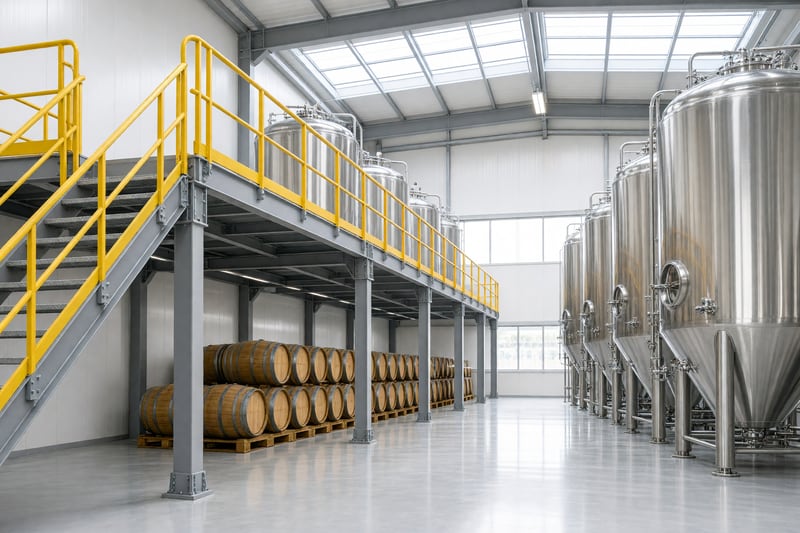
Many of them, because their job is to run high above the floor. A catwalk along a tall wall to reach lights or valves can sit well above 10 feet. So can a crossover bridge that clears a conveyor and the traffic beside it. Equipment platforms for air handlers are often raised to keep the floor free. Washington's walking-working surface rule defines a "Runway" as "An elevated walking-working surface, such as a catwalk". It defines a platform as "A walking-working surface that is elevated above the surrounding area." Both fall under the fall protection rules once people work on them.
The building code rates these surfaces separately. Seattle's Table 1607.1 lists 40 psf for maintenance and service catwalks. Walkways and elevated platforms other than exitways get 60 psf.
Where Does a Work Plan Still Apply on a Guarded Seattle Platform?
At any spot 10 feet or more up where the guardrail does not close the edge. The note in WAC 296-880-10020 exempts only areas where a guardrail system eliminates the hazard. An open gap, even a short one, keeps the plan rule alive for that area. Three cases come up most often on catwalks and platforms:
- Ladder openings. WAC 296-880-20005(3)(d) guards ladderways and platforms with guardrail and toeboards, plus "a swinging gate or so offset that a person cannot walk directly into the hole."
- Service gaps. A section left open to lift equipment in or out leaves a fall hazard while it stands open.
- Removed rails. When a rail comes off for a task, the area "must be constantly attended by an employee until the guardrail is replaced."
Each one can be designed down. A gate or an offset closes a ladder opening. A gated access point keeps a platform edge shut between service visits.
What If a Seattle Platform Sits Between 4 and 10 Feet Up?
Then fall protection still applies, but the written plan rule does not. WAC 296-880-20005 calls for protection where workers face falls of "four feet or more to the ground or lower level." For a walking-working surface, the rule's first item is a standard guardrail system, or the equivalent, on all open sides, apart from the entrance to a ramp, stairway or ladder. A toeboard is added wherever people can pass beneath, machinery moves, or falling objects could strike equipment. The written work plan in WAC 296-880-10020 starts only at 10 feet. So a low platform gets the same rails and toeboards, without the plan.
Do Equipment Platforms in Seattle Follow the Same Rules?
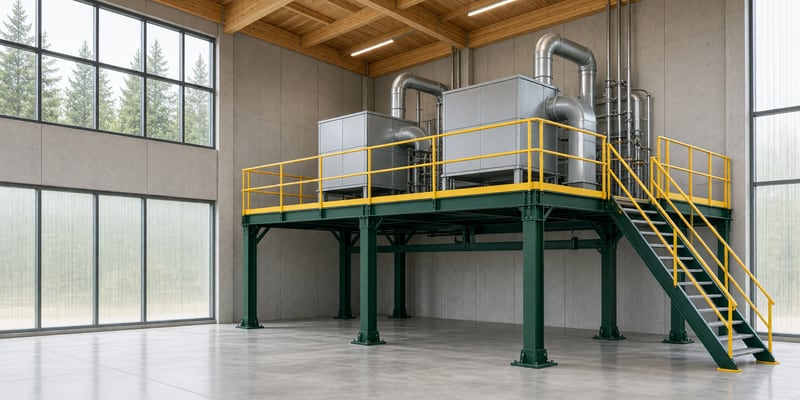
Yes, for the people who service the equipment on them. Washington defines a platform as any walking-working surface raised above its surroundings, and an equipment platform fits. WAC 296-880-20005(3)(d) also guards platforms with guardrail and toeboards on all exposed sides. The Seattle Building Code runs its own check. Section 505.3.3 says equipment platforms "shall have guards where required by Section 1015.2." SDCI reviews that in plan review, while DOSH enforces the WAC side. We design one rail that passes both reviews.
Does the 10-Foot Rule Cover Installers Building the Deck?
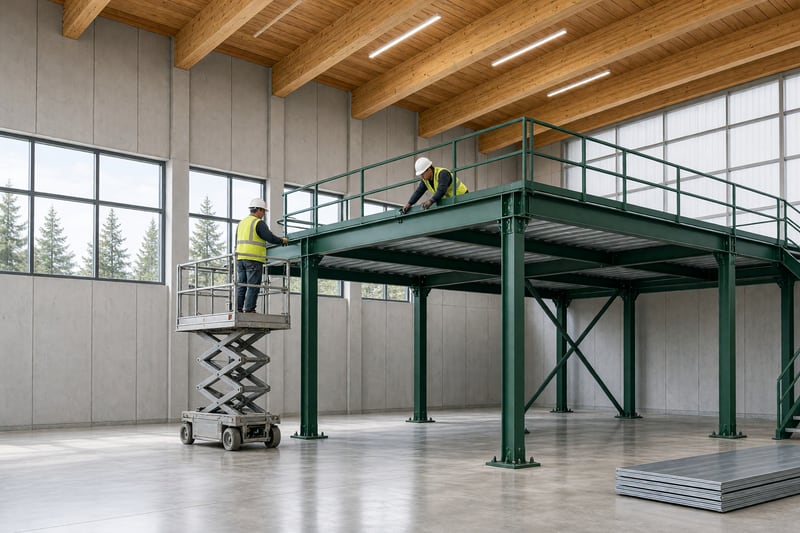
Installers work under their own fall protection rule while the steel goes up. WAC 296-880-30005(2) sets fall protection at "10 feet or more" for workers "Engaged in the erection or placement of structural members". When that work is done "on or from a floor, deck, roof, or similar surface," the 4-foot rule in WAC 296-880-200 applies instead. So once a deck is in place, crews working from it are held to 4 feet. The installer plans for that before the first beam is lifted. It is a separate matter from your own staff's plan after handover.
Does Federal OSHA Ask for the Same Written Plan?
Not in the general industry text we read. In 29 CFR 1910.28, the only written fall protection plan applies to residential roofs where usual systems are not workable. That passage points to the construction rule at 29 CFR 1926.502(k). Washington's plan rule reaches any workplace area with a fall of 10 feet or more. Both rule sets start fall protection at an unprotected edge 4 feet above a lower level. The difference lies in the paperwork above 10 feet, and in the guardrail note that can remove it. Our guide to WAC fall protection next to federal OSHA compares the two in full.
How Do We Plan Guardrails on a Seattle Catwalk or Platform?
We start from the edges and aim to close every one we can. On the layout we mark each open side, each ladder or stair entry and each spot that needs service access. Then we choose rails, gates and toeboards to close them. The engineer confirms post spacing and anchorage on the sealed drawings. You order the walkway or platform with its edge protection, and our crew installs the two together.
- Measure the fall height at each edge, including over machinery.
- Rail every open side to WAC 296-880-40005.
- Fit gates or offsets at ladder openings.
- Add toeboards wherever people pass or machines run below.
- List any spot left open, so the employer's plan can cover it.
At handover you get that marked layout. Your own fall protection plan then starts from an accurate list of every open spot.
Seattle Work Plan Questions, Answered
Does a guarded catwalk in Seattle need a fall protection work plan?
Not for the areas its guardrails protect. WAC 296-880-10020 says no work plan is required where a guardrail system eliminates the fall hazard. Open spots 10 feet or more up, such as ladder openings or service gaps, still need one.
Source: WAC 296-880-10020
Who writes the fall protection work plan for a Seattle facility?
The employer. WAC 296-880-10020 has the employer develop and carry out the plan and keep it on site. We help by closing as many edges as we can with guardrails, so fewer areas need it.
Source: WAC 296-880-10020
Does Washington's work plan rule apply outside Seattle too?
Yes. Chapter 296-880 WAC is a statewide rule enforced by DOSH, so it applies to the workplaces DOSH covers in Kent, Tacoma, Everett and across Washington, not only inside Seattle.
Source: Chapter 296-880 WAC; OSHA, Washington State Plan
Sources, read November 2026: Chapter 296-880 WAC, Unified safety standards for fall protection · WAC 296-24-73502 · OSHA, Washington State Plan · OSHA 29 CFR 1910.28 · Seattle Building Code 2021, Chapter 16 (loads and Section 1613 earthquake design) · Seattle Building Code 2021, Section 505